
Choose a Location
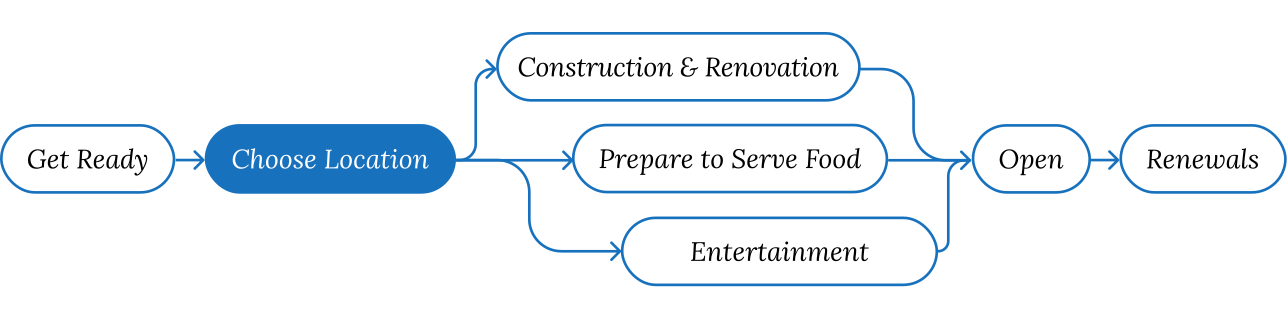
Zoning rules say what kinds of businesses can operate at a given address. Not every location in the City of Boston allows a restaurant.
Considerations
Before you commit to a space, there are a few questions to work through:
- What type of restaurant do you want to run?
- What is the property zoned for?
- Does the property have any conditions attached to it from a previous owner?
- Do you need to do any construction or renovation to get the space ready?
How you answer these questions will determine whether you need to ask the City to change the zoning at your location.
This process is called a zoning appeal. Zoning appeals can take a long time because they involve input from the community and the City. You can’t start renovations or do any work in your space until that process is done.
If you’re taking over an existing restaurant without making any changes, the process can be a little simpler. Skip to Prepare to Serve Food and Drink to learn about the food permits you need before you open.
What type of restaurant do you want to run?
Boston’s zoning code distinguishes between several types of food and drink establishments. Not all types of restaurants are allowed in all locations, and it varies by neighborhood. Common types include:
- Takeout only
- Sit-down restaurant
- Restaurant with a liquor license
- Bar
- Venue with live entertainment ending before 10:30 p.m. or after 10:30 p.m.
What is the property zoned for?
You may need to file a zoning appeal if:
- You want to change the type of restaurant operating in the space
- Any type of restaurant use is conditional or forbidden in the space
- The space has never been a restaurant of any type
Before you commit to a space, check the Boston Planning and Development Agency’s (BPDA) zoning map to confirm your intended use is allowed at that address.
Does the property have any conditions attached to it from a previous owner?
Even if the previous owner ran a restaurant at your address, that approval may have been specific to them. These special conditions are called provisos. Provisos tied to the previous owner don’t automatically transfer to you. This is one of the most common issues people encounter when taking over an existing space.
Check for provisos using the BPDA’s zoning map and the historical building permits search.
Do you need to do any construction or renovation to get the space ready?
Construction, renovation, layout changes, or new equipment all require City approval and more permits. For any construction project in a food establishment, you need:
- A plan review from Inspectional Services Department (ISD) Health
- Construction and fire permits from ISD Building
- Construction and fire permits from the Boston Fire Department (BFD)
- Trade permits for electrical work, plumbing, and other work
Check Permit History
Every building has an approved legal use. You can check your building’s existing legal use and occupancy, past permits, and any zoning conditions online.
Check Zoning Rules
Timeline: The full zoning appeals process, including its community engagement components, typically takes between 3-6 months to complete.
Zoning rules say what kinds of businesses can operate at a given address. Not every location in the City of Boston allows a restaurant.
What's Allowed at Your Address
Check your address on the free Boston Planning Department (BPD) zoning viewer map to see how it is zoned and if any special regulations apply to it.
You need to know whether restaurant, take-out, drive-in, or live entertainment use is allowed, conditional (allowed with special approval), or not allowed in your zone. You can find these allowances in your site's applicable zoning land use tables. See a list of full definitions of each kind of zoning use in the zoning code at the City of Boston Planning Department website.
How to Check a Building’s Zoning Designation
Even within the same zoning district, different types of food establishments may be allowed, conditional, or forbidden.
File a Zoning Appeal
If restaurant use is designated as conditional or forbidden at your address, you’ll need to file an appeal for zoning relief from the Zoning Board of Appeal (ZBA). This takes extra time, often several months.
- To request to change the use or occupancy of a building, submit a Long Form permit application to ISD.
- ISD will send you a refusal letter.
- Once you have this letter, you can connect with a neighborhood liaison to start the community process.
- When the community process is complete, you can apply for a hearing with the ZBA.
Restaurant zoning appeals are not uncommon. Many food service establishments require ZBA approval. You can learn more about the zoning appeal process in this guide from ISD (PDF).
Sometimes, previously granted zoning relief is tied to a particular owner. If you’re taking over an existing space, you may need to follow the zoning appeal process to reobtain that relief.
Track your zoning appeal on the ZBA Tracker.
Let Neighbors Know About Your Plans
The zoning appeals process often involves community input and feedback about your business idea. Neighborhood liaisons facilitate that process, which may include:
- An abutters’ meeting (abutters are neighbors whose property touches yours)
- Meetings with neighborhood community groups
The neighborhood liaison will guide you through the community process and decide when it’s done. If you don’t need any other community meetings, you can then apply for a hearing with the ZBA.
Get a Copy of Your Record of Legal Occupancy
You need a record of legal occupancy before you can get a permit to do work on a building. Confirm there is a legal record of use and occupancy for your property before you apply for any permits.
Commercial Leasing
This video from a local real estate advisory and investment firm, in partnership with the Mayor’s Office of Economic Opportunity and Inclusion (OEOI), guides you through the process of leasing a commercial space in Boston.
